

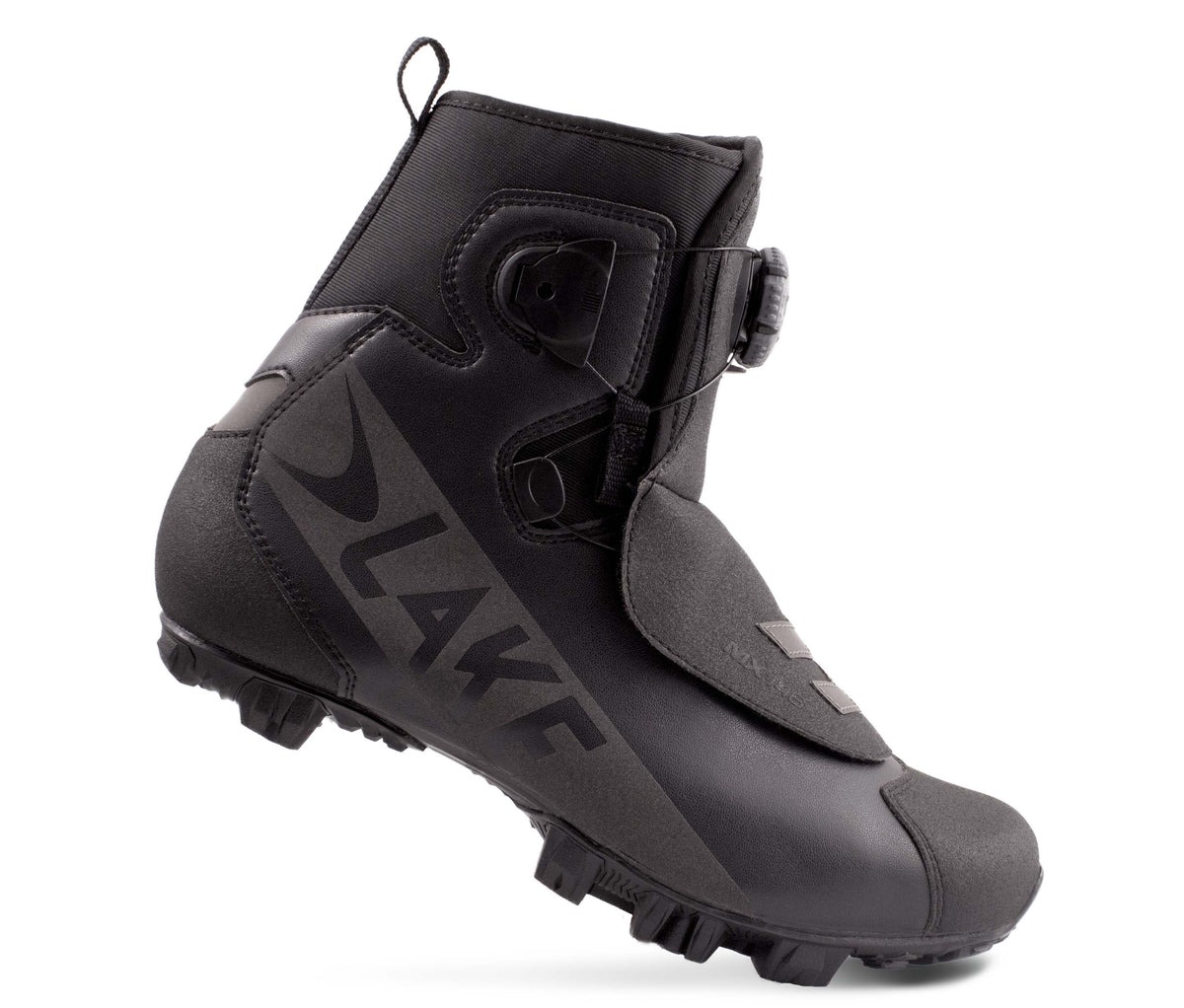
Looking for waterproof cycling shoes? The honest answer: no cycling shoe is 100% waterproof, because water can always run in at the ankle opening. What keeps your feet dry is a highly water-resistant upper, a higher cuff, light insulation and overshoes in heavy rain. Our all-weather CX146 (road), MX146 (MTB) and MXZ21 (light and fast) are built for exactly that.
All-weather cycling shoes are made for the wet, chilly days between summer and real winter: rain, spray, mud and cold that stays above freezing. In many parts of the world, winter is no longer what it used to be. Fewer weeks of frost and snow, many more weeks of rain, wet roads and grey, damp cold. Your summer shoes are too open for that weather, and a fully insulated deep-winter boot is more than you need. That gap is where an all-weather shoe earns its place.
We have made cycling shoes since 1982, and we have built cold and wet weather footwear since 1997. This guide explains what makes a cycling shoe all-weather, which of our models suits your riding, and how to keep your feet dry and comfortable from autumn to spring.
Why riders need a shoe for wet, mild weather
A summer shoe is designed to let heat out. Mesh panels, vents and a low collar keep your feet cool in July. In November rain, those same features let water and cold air straight in.
The opposite mistake is just as common. A boot built for deep winter traps a lot of warmth, which is exactly what you want on a frozen morning. On a wet day that sits well above freezing, it can feel like too much.
Our all-weather models sit in between. They are built to keep water and wind out first, with enough insulation to keep your feet comfortable when the weather is cold and damp rather than frozen. For riders whose "winter" is now mostly rain, that makes them the shoe you can wear from the first wet autumn ride to the last chilly spring morning.
What makes a cycling shoe all-weather
Four things separate a real all-weather shoe from a summer shoe with thicker socks.
Highly water-resistant, not waterproof
The CX146 and MX146 combine a water-resistant membrane with a DWR (durable water repellent) coating on the upper, so spray and rain bead off instead of soaking in. The MXZ21 has a windproof, highly water-resistant soft-shell upper with a DWR coating.
We want to be honest about one thing: no cycling shoe is completely waterproof. Every shoe has an opening at the ankle, and in long, heavy rain water eventually runs down your leg and finds its way in from the top. That is why we call our shoes highly water-resistant, and why we still recommend overshoes for a real downpour.
A higher cuff
Our all-weather models rise higher around the ankle than a summer shoe. That closes the gap where cold air and road spray normally get in, and it does more for comfort on a wet day than almost any other feature.
Light insulation
The CX146 and MX146 use 3M Thinsulate insulation, which holds warmth without making the shoe bulky. A slim shoe keeps the snug fit you need for efficient pedaling.
Grip and a glove-friendly closure
Wet days mean wet gloves. The CX146 and MX146 use a BOA M4 dial, a larger dial you can grip and turn with full-finger gloves. The MXZ21 uses speed laces that lock your foot in place with one pull. Underfoot, the MX146 and MXZ21 have rubber outsoles for grip when you put a foot down on slippery ground.
Our three all-weather models
CX146: for road riders
The CX146 is our all-weather road shoe. It takes a 3-bolt road cleat, so it works with the road pedals you already ride. We developed it for mild, damp weather: those chilly autumn and spring road rides when your race shoes are simply not warm enough. Thinsulate inside, a water-resistant membrane and DWR-coated upper outside, a BOA M4 dial and a high cuff. It is built on our Sport Last and comes in Regular and Wide.
MX146: for mud, gravel and commuting
The MX146 is the off-road and commuting version of the CX146. It shares the same insulation, water-resistant construction and BOA M4 dial, but takes a 2-bolt SPD cleat and adds a rubber Enduro outsole with ICE LOCK anti-slip lugs. That grip matters on wet leaves, muddy paths and slick bike sheds. We built it for autumn, spring, mild winters and damp weather, the days when race shoes are too cold and winter boots too warm. Fat bike, commuting, cyclocross: the MX146 handles all of it. It is also built on our Sport Last and comes in Regular and Wide. Sizes 36 to 38 do not accept toe spikes.
MXZ21: light and fast in bad weather
The MXZ21 is our lighter, more athletic shoe for bad weather. It sits on a carbon fiber and real rubber sole, so you keep strong power transfer along with grip and stability on slippery ground. The upper is windproof and highly water-resistant, and the speed laces adjust without limits for a secure, stable hold when you push hard. It is built on our Competition Last, takes a 2-bolt SPD cleat and comes in Regular and Wide.
The three side by side
| Model | Best for | Cleat | Closure | Sole | Widths |
|---|---|---|---|---|---|
| CX146 | Road riding in rain and chilly weather | 3-bolt road | BOA M4 dial | Nylon composite | Regular, Wide |
| MX146 | MTB, gravel, cyclocross, commuting | 2-bolt SPD | BOA M4 dial | Nylon composite, rubber outsole with ICE LOCK lugs | Regular, Wide |
| MXZ21 | Fast training on wet roads and trails | 2-bolt SPD | Speed laces | Carbon fiber with real rubber | Regular, Wide |
Which all-weather shoe suits your riding
You ride road and want to keep your road pedals: choose the CX146. It is the only one of the three with a 3-bolt road cleat.
You commute, ride gravel or ride off-road through the wet months: choose the MX146. The rubber outsole and SPD cleat make it the most versatile pick, and the easiest to walk in.
You train hard and want a lighter, stiffer shoe: choose the MXZ21. The carbon sole makes wet, cold efforts feel less like a penalty.
You have wider feet: all three come in Wide. A shoe that is too tight cuts circulation, and cold feet follow quickly, so width matters even more in bad weather.
All-weather shoe or deep-winter boot?
If your winters bring long spells of hard frost, snow and very cold mornings, you need more than an all-weather shoe. Our MXZ305 is built for exactly that: a boot shape that traps warm air, a highly breathable leather upper and a wicking lining. It is the fifth generation of the MXZ300, the winter-specific cycling shoe we introduced in 1997.
For the full deep-winter story, read our guide to the best winter cycling shoes. If your cold season is mostly wet rather than frozen, the CX146, MX146 or MXZ21 will cover far more of your year.
Practical tips for wet-weather riding
Size up and layer your socks
For use with winter-weight socks, we recommend ordering 1 to 1.5 sizes up from your usual Lake size. A little extra room leaves space for a thicker sock and a layer of warm air around your foot. A shoe that squeezes your foot feels colder, not warmer. Choose merino or synthetic socks, which stay warm when damp, over cotton. Check your measurements with our size guide.
Add overshoes in heavy rain
For showers, spray and wet roads, your all-weather shoe does the work alone. For hours of heavy rain, pull a pair of overshoes over it. The shoe gives you insulation and water resistance; the overshoe stops the water that runs down your leg into the ankle opening.
Dry them slowly
After a wet ride, open the closure fully, take out the insoles and stuff the shoes with newspaper. Let them dry at room temperature, away from radiators, heaters and dryers, because high heat damages adhesives and membranes.
Keep the water repellency working
Rinse off mud and road grit before it dries in. The DWR coating wears over time, so refresh it with a spray-on water repellent once or twice a season to keep water beading off the upper.
Frequently asked questions
What are all-weather cycling shoes?
All-weather cycling shoes are made for riding in rain, wind, mud and cold that stays above freezing. They combine a highly water-resistant upper, a higher cuff and light insulation, so you can keep riding through autumn, mild winters and spring. Our CX146, MX146 and MXZ21 are built for these conditions.
Are there waterproof cycling shoes?
No cycling shoe is fully waterproof, because every shoe has an opening at the ankle where water can run in from the top. Our CX146 and MX146 are highly water-resistant, with a membrane and DWR-coated upper, and the MXZ21 has a windproof, highly water-resistant upper. In long, heavy rain, add overshoes.
Do I still need overshoes with all-weather shoes?
For most wet rides, no. Our all-weather shoes handle spray, showers and wet roads on their own. For long rides in heavy, steady rain, overshoes are worth adding, because they stop water that runs down your leg from entering the shoe at the ankle.
What size all-weather cycling shoe should I order?
For use with winter-weight socks, we recommend ordering 1 to 1.5 sizes up from your usual Lake size. The extra room fits a thicker sock and leaves a layer of air that keeps your foot warm. If you ride with thin socks, stay closer to your usual size.
When should I choose a deep-winter boot instead?
Choose a deep-winter boot such as the MXZ305 when you regularly ride in hard frost, snow or long spells of severe cold. The CX146, MX146 and MXZ21 are made for wet, mild cold. Our winter cycling shoe guide explains the deep-winter options in detail.
Find your all-weather pair
Rain is no reason to stop riding. Browse our winter and all-weather collection, pick the CX146, MX146 or MXZ21 for the way you ride, and check your size before you order. Want to fine-tune the fit? Our guide to BOA dials versus laces helps you choose the closure that suits you best.
The Freedom of the Perfect Fit
Looking after your cycling shoes in winter